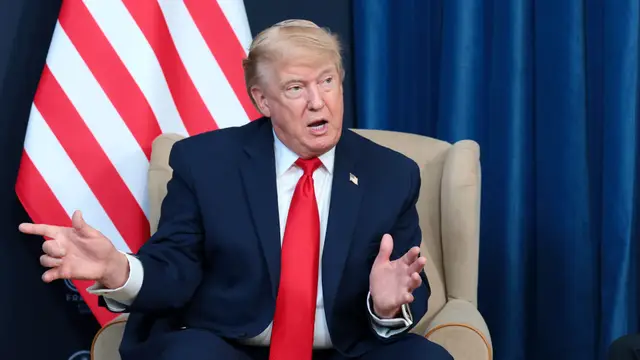
A newly revealed 14-point framework agreement between the United States and Iran has triggered intense debate around the world after President Donald Trump issued a fresh warning that military action could resume if Tehran fails to honor its commitments.
The draft agreement, which was made public after days of speculation, outlines a roadmap aimed at ending months of conflict and creating the foundation for a broader peace settlement. According to reports, the proposal includes a ceasefire, phased sanctions relief, restoration of maritime trade routes, economic reconstruction assistance, and commitments related to Iran’s nuclear program. The framework is intended to lead to a final agreement within the coming weeks.
However, despite optimism surrounding the proposal, President Trump emphasized that the memorandum is not yet a finalized peace deal. Speaking during the G7 summit, he made it clear that the United States remains prepared to take military action if Iran fails to comply with the agreement’s terms. Trump stated that America would “probably go back to bombing” if Iran does not “behave” or uphold its side of the deal.
The leaked framework reportedly includes several major provisions. Among them are commitments to maintain a ceasefire, respect national sovereignty, reopen critical shipping routes, and establish mechanisms to monitor compliance. Reports also suggest that sanctions could be lifted in stages while discussions continue over long-term security and nuclear issues.
Supporters argue that the proposal offers a rare opportunity to reduce tensions in one of the world’s most volatile regions. They believe a successful agreement could stabilize energy markets, improve international trade, and prevent a wider conflict that could affect millions of people. Financial markets have already reacted positively to signs of de-escalation, with some analysts pointing to lower oil prices as evidence that investors are hopeful diplomacy will succeed.
Critics, however, remain skeptical. Some lawmakers and foreign policy experts question whether Iran will fully comply with the terms, while others argue that the agreement may provide too many concessions before permanent guarantees are secured. Questions also remain regarding enforcement mechanisms and what would happen if either side accuses the other of violating the deal.
For now, the world is watching closely as negotiators work toward a final agreement. Whether this framework becomes a historic peace breakthrough or another chapter in the long-running tensions between Washington and Tehran may depend on what happens over the next several weeks.
Leave a Reply