Introduction
What started as a courtside fashion statement has officially become a piece of New York sports history.

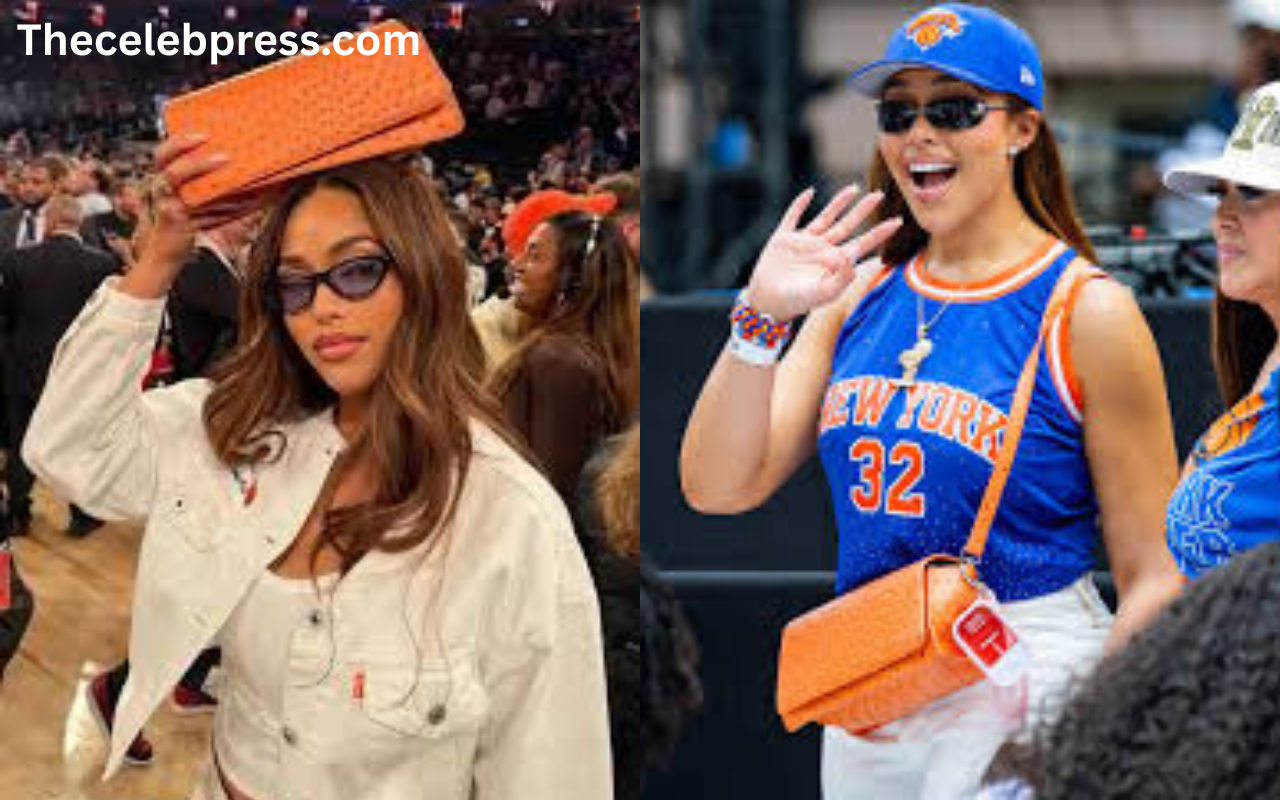
Jordyn Woods’ now-famous orange clutch—the handbag many Knicks fans affectionately dubbed the team’s “lucky bag” during its unforgettable championship run—has been given an unexpected new home. Instead of sitting courtside at Madison Square Garden, the accessory is now on display at New York City’s legendary Solomon R. Guggenheim Museum, highlighting how a simple fashion piece became one of the most talked-about symbols of the NBA postseason.
The museum exhibition celebrates the crossover between sports, fashion, and pop culture, recognizing the bag’s unlikely role in one of the most memorable championship stories in recent Knicks history.
The Orange Bag That Became a Playoff Legend

Throughout the New York Knicks’ remarkable playoff campaign, Jordyn Woods was frequently seen courtside supporting her fiancé, Knicks star Karl-Anthony Towns, while carrying a bright orange clutch from her own fashion label, Woods by Jordyn.
Fans quickly noticed an unusual pattern.

Whenever Woods brought the bag to games, the Knicks kept winning. The superstition only grew stronger after the team’s only Finals loss came on the night she was unable to bring the clutch inside Madison Square Garden because of enhanced security and a strict no-bag policy related to a presidential visit. When the bag returned for the following games, so did the victories.
Although everyone involved has treated the story with good humor, the accessory quickly transformed into a beloved symbol among Knicks supporters.
A Museum-Worthy Moment
Following the Knicks’ historic championship victory—the franchise’s first NBA title in more than five decades—the Solomon R. Guggenheim Museum announced that Woods’ orange clutch would be displayed in Café Rebay inside the museum from June 24 through June 28.
Museum Director Mariët Westermann embraced the playful narrative surrounding the bag, describing it as “the first ever clutch that actually became clutch.”

The exhibit reflects the museum’s broader interest in showcasing cultural moments where sports, design, fashion, and community intersect. Rather than treating the bag simply as an accessory, the Guggenheim is presenting it as an object that captured a unique moment in New York City’s cultural history.
Jordyn Woods Reacts to the Honor
For Woods, the museum recognition came as a complete surprise.
She said that the Guggenheim has always been one of her favorite places and never imagined that something she personally designed would one day be displayed there.
The entrepreneur also reflected on how surreal it feels to see the accessory preserved as part of the Knicks’ championship celebration, describing the exhibit as another reminder of how special the team’s historic season was.
More Than Just a Fashion Accessory

The orange “Tux Clutch Mini,” which originally retailed for around $125 through Woods by Jordyn, experienced enormous demand during the playoffs.
As its popularity exploded online, the clutch sold out, prompting the brand to switch production to made-to-order so more customers could purchase it. Fashion analysts have pointed to the bag as an example of how authentic storytelling and viral sports moments can dramatically elevate a fashion brand without traditional advertising.
Its journey—from a sample accessory designed for playoff outfits to one of the most recognizable handbags in basketball—illustrates the growing influence of athlete families and social media in shaping modern sports culture.
Karl-Anthony Towns Helped Turn the Bag Into an Icon
Karl-Anthony Towns also embraced the growing superstition throughout the playoffs.

After one of the Knicks’ biggest victories, he joked that the bag deserved to be displayed in either the Guggenheim or the Whitney Museum because it had “done its thing.”
The lighthearted comment quickly gained traction online and ultimately became reality when the Guggenheim reached out to Woods about creating the exhibition. What began as a postgame joke ultimately resulted in one of the most unique museum displays connected to an NBA championship.

Key Takeaways
- Jordyn Woods’ orange clutch became known as the Knicks’ unofficial lucky playoff bag.
- The accessory was designed by Woods for her fashion brand, Woods by Jordyn.
- Fans linked the bag to the team’s 13-game winning streak.
- The Guggenheim Museum is displaying the clutch from June 24–28.
- The exhibition celebrates the connection between fashion, sports, and New York culture.
- The viral attention helped the bag sell out and boosted Woods’ fashion brand.

Frequently Asked Questions
Why is Jordyn Woods’ bag famous?
It became associated with the New York Knicks’ championship-winning playoff run after fans noticed the team consistently won when Woods carried the orange clutch to games.
Where is the bag being displayed?
The bag is being exhibited at the Solomon R. Guggenheim Museum in New York City.
Who designed the bag?
Jordyn Woods designed the orange Tux Clutch Mini for her fashion label, Woods by Jordyn.
Why did fans call it lucky?
The Knicks won nearly every playoff game in which the bag was present, while the only Finals loss came when Woods couldn’t bring it into the arena because of security restrictions.
Is the bag available to buy?
The original release sold out quickly, and Woods by Jordyn later shifted the clutch to made-to-order production due to overwhelming demand.
Is Jordyn Woods engaged to Karl-Anthony Towns?
Yes. Woods and Knicks star Karl-Anthony Towns are engaged.
Conclusion
Few fashion accessories ever become part of sports folklore, but Jordyn Woods’ orange clutch managed exactly that. Whether viewed as a lucky charm, a clever marketing success, or simply a memorable piece of Knicks history, the bag has earned a place well beyond the basketball court.
Its temporary exhibition at the Guggenheim Museum highlights how everyday objects can take on extraordinary cultural meaning when they become part of unforgettable moments. For Knicks fans, the orange clutch will always represent more than fashion—it symbolizes one of the most celebrated championship runs in franchise history.
Leave a Reply