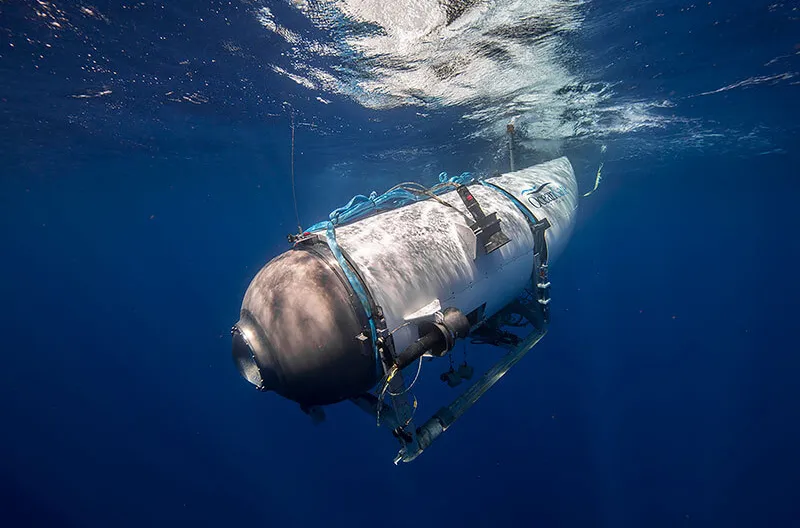
Titan Sub Disaster Causes Revealed in New Report Exactly Three Years After Craft Went Missing
Three years after the Titan submersible disappeared during a deep-sea expedition to the wreck of the Titanic, a newly released investigation report has provided the most detailed explanation yet of what caused one of the most shocking maritime disasters in recent history.
The Titan, operated by OceanGate, lost contact with its support vessel on June 18, 2023, during a descent to the Titanic wreck site in the North Atlantic Ocean. A massive international search operation followed before authorities confirmed that the submersible had suffered a catastrophic implosion, killing all five people on board.
Those who died were OceanGate CEO Stockton Rush, Titanic expert Paul-Henri Nargeolet, British businessman Hamish Harding, Pakistani-British businessman Shahzada Dawood, and his 19-year-old son Suleman Dawood.
According to the final report released by the Transportation Safety Board of Canada, the disaster resulted from a combination of design flaws, inadequate engineering practices, insufficient testing, and a lack of effective oversight. Investigators found that Titan’s carbon-fiber pressure hull was never fully validated to confirm it could safely withstand the extreme pressures encountered during repeated deep-sea dives.
The report states that the construction and testing of the vessel did not follow standard engineering practices. Investigators also discovered structural defects in material samples linked to the hull, raising concerns about the craft’s long-term durability. The findings suggest that repeated exposure to immense underwater pressure may have progressively weakened the vessel over time.
Officials also criticized OceanGate’s approach to safety. The investigation concluded that company leaders underestimated the risks associated with the experimental design and relied too heavily on internal monitoring systems rather than independent certification and testing. The report specifically highlighted issues such as “groupthink” and confirmation bias, which may have contributed to warning signs being overlooked.
Investigators pointed to several incidents before the fatal dive that may have damaged the submersible or indicated underlying problems. These included a collision with the Titanic wreck during an earlier expedition and other events that may have placed additional stress on the hull. Despite these concerns, the vessel continued operating.
The report also renewed scrutiny of the broader regulatory environment surrounding deep-sea tourism. Because Titan operated in an area with limited oversight and was not independently certified through traditional classification systems, investigators say important safety gaps went unaddressed. The findings have prompted renewed calls for stronger international standards governing experimental submersibles carrying passengers.
The Titan disaster became a worldwide story in June 2023 as rescue teams raced against time to locate the missing craft. For days, hope remained that those on board could be found alive. That hope ended when debris discovered on the ocean floor confirmed the vessel had imploded during its descent.
Three years later, the newly released findings paint a picture of a tragedy that investigators believe was avoidable. Rather than a sudden, unforeseeable accident, the report describes a chain of engineering failures, missed warnings, and safety shortcomings that ultimately led to the loss of five lives in one of the most closely watched maritime disasters of the modern era.
Leave a Reply